Türkçe
 Deutsch
 Русский
 عربي
- Home
- › Blog
- › Tourism Guide
- › What Do the Colours of Traffic Signs Mean in Türkiye?
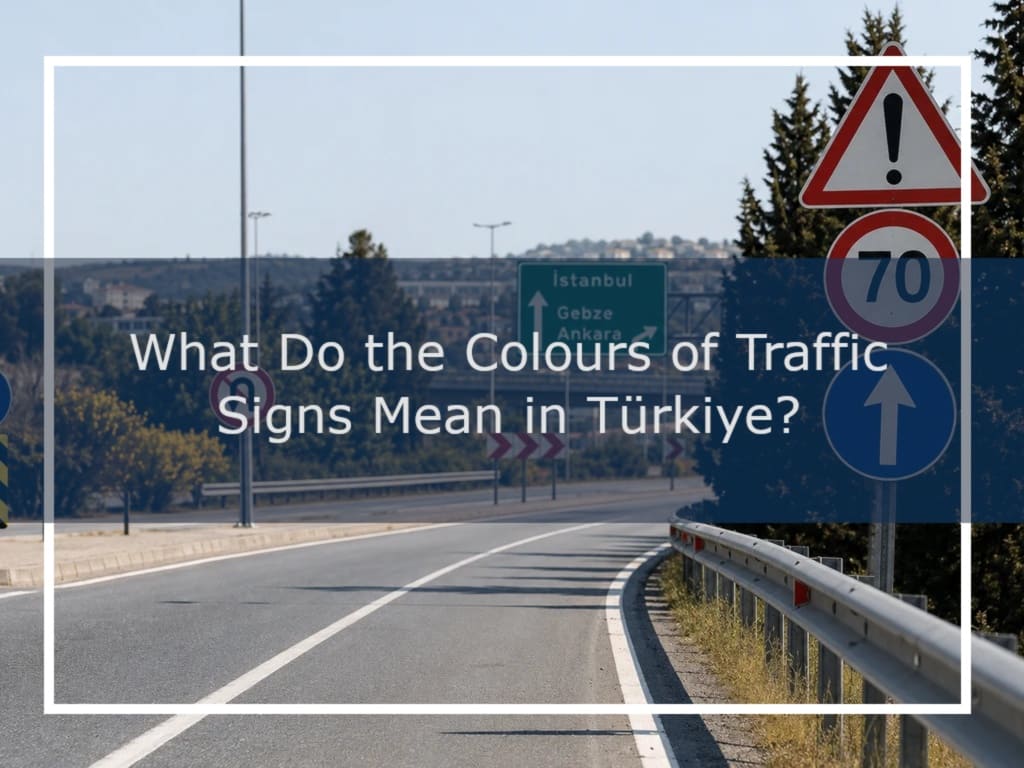
What Do the Colours of Traffic Signs Mean in Türkiye?
Traffic signs communicate with drivers and other road users through more than symbols alone. Their colours, shapes and written information all help deliver a clear message. Recognising the colour of a sign can help drivers understand its general purpose more quickly. Red is commonly associated with warnings and restrictions, blue with mandatory instructions or information, green with route guidance, and brown with tourist attractions.
However, a traffic sign should never be interpreted by colour alone. Its shape, symbol, wording and location on the road must all be considered together. The same colour may serve different purposes in different sign categories. Understanding the basic colour system is therefore an important first step towards reading road signs more efficiently.
Why Are Colours Used on Traffic Signs?
Drivers have limited time to examine a sign while the vehicle is moving. Standardised colours allow the general type of message to be recognised from a distance. Once the colour has attracted attention, the sign’s shape and symbol provide the remaining details.
For example, a red-bordered triangular sign normally warns drivers about a road condition ahead, while a red-bordered circular sign usually introduces a restriction or prohibition. Blue circular signs generally indicate a direction or action that road users are required to follow.
What Do Red Traffic Signs Mean?
Red is one of the most noticeable colours used on traffic signs in Türkiye. It appears on warning signs, prohibitions, restrictions, stopping and parking regulations. Its exact meaning depends on the shape and symbol of the sign.
Red-Bordered Triangular Signs
Triangular signs with a red border generally warn drivers about a road condition or potential hazard ahead. Sharp bends, narrowing roads, slippery surfaces, pedestrian crossings, school crossings, railway crossings and roadworks are commonly shown in this format.
When drivers see one of these signs, they should assess the road conditions, adjust their speed accordingly and prepare for the situation represented by the symbol.
Red-Bordered Circular Signs
Circular signs with a red border usually indicate that a particular action is prohibited or restricted. Speed limits, no-entry rules, turning restrictions, overtaking bans and limitations applying to specific types of vehicles may all be displayed in this format.
The number or symbol inside the circle explains the restriction. For example, a number inside a red-bordered circle represents the maximum permitted speed for that section of road.
The Red Stop Sign
The “STOP” sign has a red background and a distinctive octagonal shape so that it can be recognised quickly from different directions. It requires the driver to come to a complete stop at the indicated point and continue only after checking the road.
Red and Blue Parking Signs
Signs with a blue background, red border and red diagonal lines are used for parking and stopping regulations. A single diagonal red line generally means that parking is prohibited, while two crossed red lines indicate that both stopping and parking are prohibited.
What Do Blue Traffic Signs Mean?
Blue is commonly used for mandatory instructions and general road information. Whether the sign is circular, square or rectangular helps drivers understand the type of message being given.
Blue Circular Signs
Blue circular signs generally show a compulsory direction or action. Straight ahead only, turn right or left, keep around a roundabout, compulsory cycle lane and compulsory pedestrian route signs are examples from this category.
Rather than offering a recommendation, these signs indicate how the road must be used or which direction must be followed.
Blue Square and Rectangular Signs
Blue square or rectangular signs usually provide useful information to road users. Parking areas, hospitals, fuel stations, public telephones, hotels, restaurants and other service locations may be represented by white symbols on a blue background.
These signs are particularly useful on long journeys, helping travellers locate places to rest, refuel, eat or stay overnight.
What Do Green Traffic Signs Mean?
Green direction signs are generally used on motorways and access-controlled roads. They may display destinations, junctions, exits, lane directions and distance information using white lettering and symbols.
Seeing a green direction sign usually indicates that the driver is travelling on, or being directed towards, a motorway or another controlled-access route. Exit numbers and lane arrows help drivers choose the correct lane before reaching a junction.
Planning the route in advance makes motorway signs easier to follow during intercity journeys. For more travel preparation advice, you can read our article about car rental and enjoying long journeys.
What Do Brown Traffic Signs Mean?
Brown signs direct road users towards historic, cultural, natural and tourist attractions. Ancient cities, museums, archaeological sites, castles, national parks and popular visitor areas may be shown using this colour.
On tourist routes, brown signs make it easier to find the turn from the main road towards a particular attraction. The sign may include the name of the destination, a directional arrow or distance information.
A brown sign does not necessarily mean that the entire road is a tourist route. It usually indicates the direction to a specific place of interest.
What Do Yellow Traffic Signs Mean?
Yellow signs are generally used in areas where road construction, maintenance or temporary traffic arrangements are in place. The bright background makes it easier to recognise that the usual road layout may have changed temporarily.
Within these areas, lanes may be redirected, the road may become narrower, temporary speed arrangements may apply or traffic may be sent along an alternative route. Drivers should follow the symbols and directional arrows carefully.
A yellow background does not change the basic meaning of the symbol. For example, a road-narrowing symbol on a yellow background still warns that the road becomes narrower ahead; the yellow colour highlights that the situation is related to temporary roadworks.
How Are White and Black Used on Traffic Signs?
White is used as the background colour on many warning and regulatory signs. Red borders and black symbols are easier to distinguish against a white background. Speed limits, turning restrictions and many warning signs are common examples.
Black is primarily used for symbols, numbers and lettering. Bend directions, narrowing-road symbols, speed-limit figures and vehicle illustrations may all appear in black. Black does not represent a separate sign category by itself; it helps make the main message clearer.
Is the Colour or Shape of a Sign More Important?
Colour and shape must be considered together to understand a traffic sign correctly. The colour helps identify the general category of the message, while the shape helps explain the sign’s function more quickly.
Common colour and shape combinations used in Türkiye include:
- Red-bordered triangle: Warning or road condition requiring attention
- Red-bordered circle: Prohibition or restriction
- Blue circle: Compulsory direction or action
- Blue square or rectangle: Information or service point
- Green rectangle: Motorway or controlled-road direction
- Brown rectangle: Tourist or cultural destination
- Yellow background: Temporary roadworks or traffic arrangements
The octagonal shape of the STOP sign and the inverted triangular shape of the GIVE WAY sign make these important instructions easier to recognise from a distance and from different angles.
What Should Foreign Drivers Know in Türkiye?
Many traffic signs in Türkiye use symbols that are similar to those found in international road-sign systems. However, destination names, written explanations and supplementary panels may appear in Turkish. Foreign drivers may therefore benefit from learning the most common speed-limit, compulsory-direction, no-entry, parking and motorway-exit signs before travelling.
Navigation applications can make route planning easier, but drivers should always follow the signs and temporary instructions displayed on the road. Roadworks, new junction layouts and temporary lane changes may not appear immediately in a navigation system.
How Should Signs Be Followed at Night or in Rain?
Reflective materials used on traffic signs make them easier to see at night and in reduced visibility. Even so, rain, fog and heavy traffic may reduce the time available to read a sign clearly.
In these conditions, speed should be adjusted to the road and visibility, the following distance should be increased and lane changes should be planned in advance. For more detailed advice, you can read our guide on how to drive safely in rainy weather.
Correct tyre pressure also supports balanced contact between the vehicle and the road in changing conditions. You can learn more in our article about correct tyre pressure and driving safety.
What Should You Do If a Sign Is Faded or Difficult to See?
If the colour of a sign is not clearly visible from a distance, drivers should also consider its shape, symbol, road markings and nearby signs. In areas with limited visibility, reducing speed gradually provides more time to understand the road layout.
At junctions, near schools, pedestrian crossings and roadwork areas, the entire traffic-sign system should be considered rather than focusing on a single sign.
How Can Traffic Sign Colours Be Remembered More Easily?
Instead of trying to memorise every sign separately, associating each colour with a general message can make the system easier to understand:
- Red: Warning, prohibition or restriction
- Blue: Compulsory action or road information
- Green: Motorway and main-route direction
- Brown: Tourist and cultural attractions
- Yellow: Temporary roadworks and traffic arrangements
After identifying the general colour category, drivers can look at the shape and symbol to understand the full instruction. With regular driving experience, the connection between colour, shape and meaning becomes easier to recognise.
Following Traffic Signs While Driving a Rental Car in Türkiye
When exploring different cities by rental car, following the signs along the route helps the journey proceed in a more organised way. Reviewing the dashboard, lighting controls and navigation features when collecting the vehicle also makes it easier to begin the journey comfortably.
Parking signs and compulsory-direction signs are frequently encountered in city centres, while speed limits, junction warnings and destination signs become more important on intercity roads. Green signs guide drivers on motorways, brown signs indicate tourist attractions and yellow signs highlight temporary road arrangements.
Recognising Colours Helps You Read Signs More Quickly
The colours of traffic signs in Türkiye help communicate the type of message quickly. Red highlights warnings and restrictions, blue indicates compulsory actions and information, green is used for motorway guidance, brown points towards tourist destinations and yellow marks temporary road arrangements.
The shape, symbol and location of the sign must always be considered alongside its colour. Understanding traffic signs supports a more informed and organised driving experience in cities, on long-distance routes and while exploring tourist destinations.
With Cizgi Rent A Car, you can easily complete your car rental and choose a vehicle that suits anything from city journeys to longer travel plans.
Explore Cizgi Rent A Car vehicle options.